Rev. George Varughese (Shaji Karackal)
When the mint fires glowed late into the night, a master engraver bent over a small disk of gold. The emperor’s command was unlike the usual work: make room for Christ.
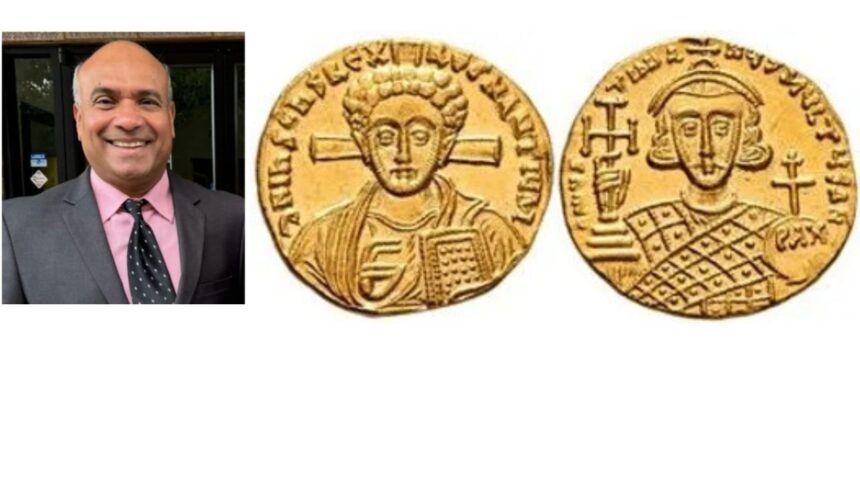
The engraver began with a face—not grand with a jeweled crown, but calm and direct. He gave Christ long hair and a beard, placed a cross behind his head, and shaped one hand in blessing. In the other, he set a book: the Gospels, held as if their words mattered more than the weight of the gold.
Then came the reverse. Justinian II stood upright, dressed in imperial splendor, holding a cross. Yet he was not the central image. The emperor’s place was on the other side, smaller in meaning if not in metal: a ruler declaring himself a servant of Christ.
The coin passed from hand to hand: through markets, across counters, into purses and distant cities. It could buy a meal or settle a debt, but it also carried a message no purse could contain. Power, it said, might command armies and mint gold—but it, too, answered to something beyond itself.
More than thirteen centuries later, that tiny image still speaks. It reminds us that even an object made for everyday exchange can carry an idea across time: that humility can stand beside authority, and that a face stamped into metal can outlast the hands that made it.