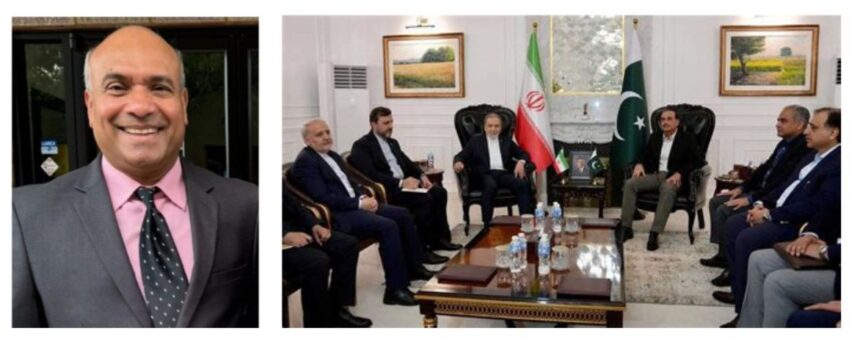
George Varughese
Washington DC/Tehran: A fragile ceasefire between the United States, Israel, and Iran has held since early April, following weeks of intense US-Israeli strikes on Iranian nuclear and military targets that began in late February. The war, triggered by concerns over Iran’s nuclear program, triggered Iranian retaliatory attacks and led to a major disruption in global energy flows after Tehran restricted shipping through the Strait of Hormuz. The central sticking point remains the Strait of Hormuz. Iran has effectively controlled traffic in the critical waterway, while the US has enforced a naval blockade on Iranian ports in response to stalled talks. This dual blockade has created significant economic pressure on both sides and raised global oil prices. In the past 48 hours, Iran has put forward a new proposal aimed at breaking the impasse. According to regional officials and US media reports, Tehran is offering to reopen the Strait of Hormuz, allow freer commercial shipping, and move toward a permanent end to hostilities. In exchange, it wants the US to lift its naval blockade and unfreeze Iranian assets. Crucially, the Iranian plan seeks to postpone negotiations on its nuclear program, uranium enrichment, and ballistic missiles to a later phase, effectively decoupling the immediate maritime and ceasefire issues from the broader nuclear dispute.
Trump administration has confirmed it is reviewing the proposal. President Trump described it as “much better” than previous offers but stated it is “not enough,” with US officials insisting that any lasting deal must address Iran’s nuclear ambitions upfront. Prospects for a breakthrough remain low, as hardliners within Iran’s Islamic Revolutionary Guard Corps (IRGC) continue to dominate decision-making and resist major concessions.
Separate from the US-Iran track, Israel and Lebanon have extended their ceasefire (originally involving Hezbollah) by three weeks, though low-level violations and tensions persist. Diplomacy continues through mediators including Oman, Pakistan, and others, but both sides appear to be waiting for the other to blink first. The situation remains highly fluid, with the global economy watching closely for any movement on the Strait of Hormuz or a return to direct negotiations.