Rev. George Varughese (Shaji Karackal)
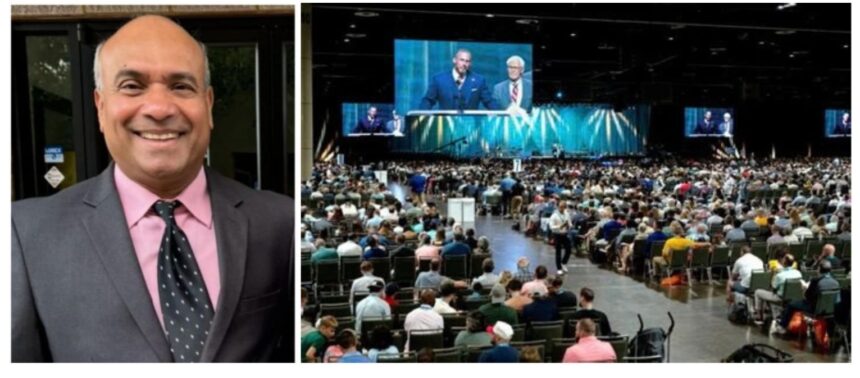
ORLANDO, Florida — The Southern Baptist Convention (SBC), America’s largest Protestant denomination, has moved closer to making it official: churches that allow women to serve as pastors or preach to the congregation could be kicked out.
At their annual meeting this week, thousands of church representatives (called “messengers”) voted overwhelmingly in favor of a constitutional amendment. The vote was roughly 6,028 to 2,026 — about a 3-to-1 margin, or nearly 75% support. That easily passed the two-thirds majority needed for the first round.
The change, known as the “Truth and Unity Amendment,” was proposed by Albert Mohler, president of the Southern Baptist Theological Seminary. It would add clear language to the SBC’s constitution saying that cooperating churches may not “affirm, appoint, or endorse a woman serving in the office or function of a pastor/elder/overseer, specifically preaching to the assembled congregation.”
Why This Matters Southern Baptists have long believed, based on their reading of the Bible, that the role of pastor should be held only by men. Their official statement of faith already reflects this view. However, a few churches have had women in pastoral roles or allowed them to preach, leading to ongoing debates and some churches being removed in recent years.
Supporters of the amendment say it brings clarity and unity to what the denomination stands for. They argue it prevents confusion and keeps churches aligned with traditional beliefs. Opponents, including some women’s ministry advocates, worry it could silence women’s voices in the church, distract from bigger priorities like sharing the gospel, and make it harder for women already serving in various roles. They point out that many Southern Baptist women already serve in important ministry positions that aren’t called “pastor.”
What Happens Next? This was only the first vote. The amendment must pass by a two-thirds majority again at next year’s annual meeting in 2027 before it officially becomes part of the SBC constitution. If it does, churches with women pastors would have to change their practices or leave the denomination.
The decision highlights ongoing tensions in conservative evangelical circles about gender roles, biblical interpretation, and how to balance tradition with the realities of modern church life. For now, the Southern Baptist Convention has sent a strong signal about where it stands on pastoral leadership. The conversation, however, is far from over.