Re. George Varughese (Shaji Karackal)
London, United Kingdom — More than 2,500 years after it was created, the famous Cyrus Cylinder continues to astonish historians and believers alike, offering powerful confirmation of the biblical story of Jewish restoration after exile.
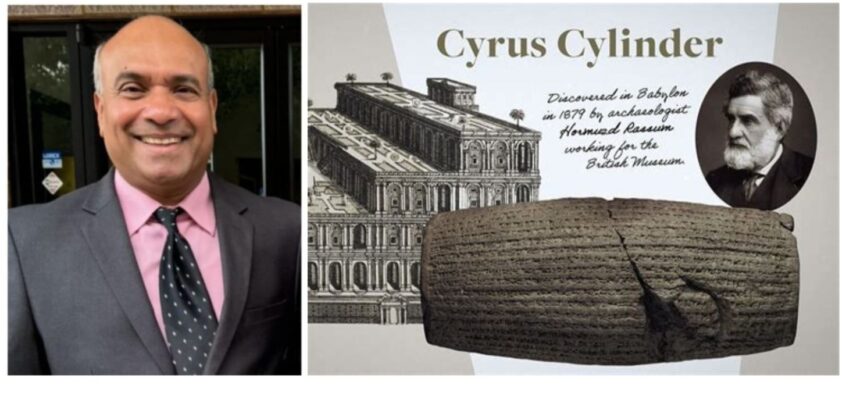
Discovered in 1879 by archaeologist Hormuzd Rassam amid the ruins of ancient Babylon in modern-day Iraq, the Cyrus Cylinder is a small barrel-shaped clay artifact inscribed with ancient Akkadian cuneiform script. Dating to 539–538 BC, the cylinder records the policies of Persian King Cyrus the Great immediately after he conquered the mighty Babylonian Empir.
In the inscription, Cyrus describes how he peacefully entered Babylon and immediately reversed the oppressive policies of the previous king. He restored temples, returned sacred images to their shrines, and allowed deported peoples to return to their homelands — a groundbreaking act of religious tolerance in the ancient world.

While the cylinder does not specifically name the Jews or Jerusalem, it provides strong historical evidence for the decree recorded in Ezra Chapter 1 of the Bible. In that passage, Cyrus proclaims:
“The Lord, the God of heaven, has given me all the kingdoms of the earth and he has appointed me to build a temple for him at Jerusalem in Judah.”
This royal policy allowed thousands of Jewish exiles to return home after 70 years of captivity, rebuild the Temple, and restore their worship — an event many see as a miraculous fulfillment of prophecy.
Housed today in the British Museum, the Cyrus Cylinder is celebrated as one of the earliest examples of humane governance and respect for different faiths. For people of faith, it stands as a remarkable testimony that God can move the heart of even a pagan king to accomplish His divine purposes.
This humble piece of clay continues to inspire millions, reminding the world that freedom, restoration, and new beginnings are possible even after the darkest seasons of exile and loss.