Rev. George Varughese (Shaji Karackal)
City of Hillah, Iraq: In a discovery that touches hearts and strengthens faith, archaeologists have uncovered strong evidence supporting the biblical account of the Tower of Babel in Genesis 11. The story of humanity working together to build a massive tower “with its top in the heavens” now feels remarkably real.
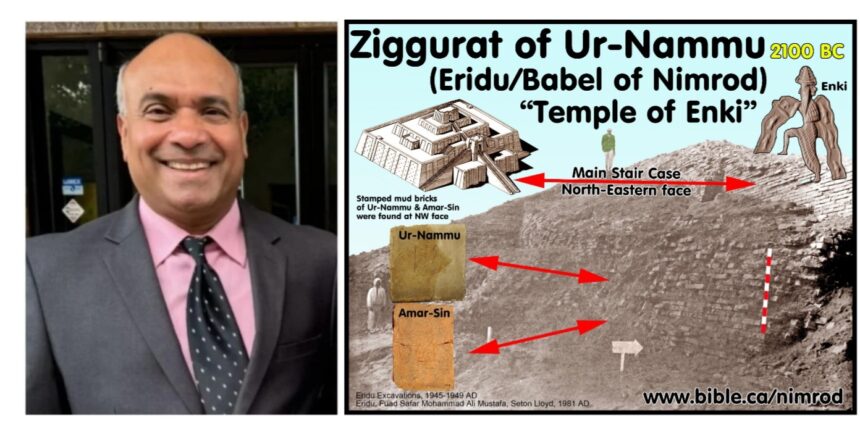
At the ancient site of Babylon — biblical Babel — stands the massive foundation of a towering stepped temple known as Etemenanki, meaning “House of the Foundation of Heaven and Earth.” This ziggurat once rose nearly 300 feet high and was constructed using baked bricks joined with bitumen mortar, exactly as the Bible describes the building materials.
One of the most remarkable finds is the Tower of Babel Stele from the Schøyen Collection. This ancient black stone monument, dating to the time of King Nebuchadnezzar II (around 604–562 BC), features a clear image of the seven-story ziggurat beside the king. The inscription proudly records that Nebuchadnezzar rebuilt the tower, raised its top to heaven, and used the very same materials mentioned in Scripture — baked bricks and bitumen.

Early 20th-century excavations led by German archaeologist Robert Koldewey further confirmed the structure. His team uncovered the enormous square foundations and stairways, along with bricks stamped with Nebuchadnezzar’s name, matching the royal building project described on the stele.
Beyond the stones and ancient inscriptions, this discovery speaks to something deeper. It reflects humanity’s timeless desire to reach for greatness and unity. At the same time, the biblical story gently reminds us that true purpose and lasting connection come not from proud human ambition, but from humility before God.
These remarkable archaeological findings bridge thousands of years, showing that the Bible’s words are grounded in real history. What was once dismissed by some as mere legend now stands as a powerful, touching witness: God’s Word endures, and the ruins themselves echo its truth.