
Mathew Samuel
In seven intense days and 1,300 kilometres of rough roads across Kanker, Sukma, Dantewada, and on to Raipur, I saw with my own eyes what official press releases refuse to admit. The dreaded Naxal red corridor did not collapse solely under police bullets or government schemes. The real transformation came from something far more powerful and subtle: the Bible entering Adivasi villages, changing hearts, families, and entire communities. Where guns and mines once ruled, house churches now stand. Former militants have traded AK-47s for pulpits. This is the untold story of how the Bible pacified what force alone could not.

2007: A Land Closed to Light
Back in 2007, these districts were forbidden territory. Roads were destroyed or nonexistent. Villages were sealed by fear and Naxal control. Police could not reach deep inside. I managed a rare visit to the home of a slain dalam leader, Prabhakar Juru. He had been eliminated by anti-Naxal forces. His daughter joined the militia and met the same fate. There, I met her younger brother — a young man freshly returned from Bible study in Mumbai. He was already stepping into the role of pastor, determined to start a village church and send local youth to Bible college.
Even then, amid the terror, the contrast hit me hard. I told my team: “If Christian missionaries break through into these villages, the Naxal movement is finished.” The ideology of endless class war had no defence against a message that offered personal redemption and communal hope. That prediction proved truer than I imagined.
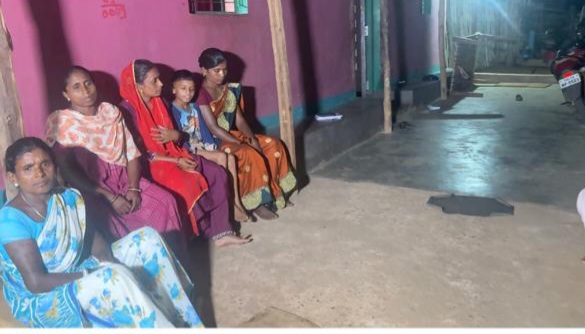
The Dramatic Shift on the Ground
Today, the roads are open. We drove freely into villages that were once off-limits. People spoke openly. The suffocating atmosphere of fear has lifted. But the biggest change was not just physical infrastructure. It was in the people. Where are the terrifying Naxal cadres who once planted bombs and killed without remorse? Many have not vanished through encounters alone. A surprising number have laid down arms after encountering the Bible.
Local journalists, senior police officers, and bureaucrats I met confirmed what the official narrative hides. Yes, operations and development played a role in opening access. But the heavy, decisive drop in Naxal activity came from Christian faith penetrating the villages. Leaders and their families converted. Support networks crumbled. The cycle of violence lost its recruits and sympathisers. One ex-militia member I spoke to, now a pastor, put it plainly: the gun promised justice through blood; the Bible delivered dignity without death.

How the Bible Changed Everything
The mechanism was straightforward yet profound. Naxal leaders — often Adivasis themselves — showed surprising tolerance toward Christian workers. Prayer meetings and Bible teaching were permitted. Missionaries brought practical help: literacy through Biblical education, basic health and hygiene that reduced suffering in remote areas, and a strong sense of community. These were real answers to daily hardships that Naxal ideology never solved.
In contrast, RSS and Sangh Parivar groups were blocked from entering the forests. This asymmetry allowed the Christian message to spread steadily and deeply. The Bible spoke directly to Adivasi realities. These tribal communities follow their own nature-based traditions, own festivals tied to forests and rivers, and maintain distinct identities. They are not bound by mainstream Hindu practices or dietary taboos — beef and non-vegetarian food are normal. Many do not worship the same gods.
Christian faith offered an empowering alternative without erasing their core identity. Biblical stories of liberation resonated with people long exploited. Cleanliness and health teachings improved lives tangibly. House churches created safe spaces for hope and mutual support. Youngsters trained in Bible colleges returned as leaders. Former Naxals found purpose as pastors, pulling more youth away from the gun. The transformation snowballed.
By 2017, as Naxal control weakened, Sangh groups finally entered expecting to find receptive “Hindu tribals.” Instead, they encountered villages filled with house churches and transformed believers. The shock was visible. This explains the rising tensions and pushback seen today.
Nuances, Hard Realities, and Implications
This is no fairy tale. Security operations created the space for change by weakening Naxal dominance. Development brought roads and schools. Many cadres surrendered due to sheer fatigue, incentives, or losses. Not every village converted uniformly, and some retain traditional practices alongside faith. Syncretism exists. Allegations of inducement or coercion surface on all sides, as they do in any religious shift. Christianity remains a minority overall, but its impact in these pockets is outsized.
Yet the ground truth from my journey is unmistakable: the Bible addressed the spiritual and social vacuum that guns and schemes could not fill. It replaced a culture of fear and killing with one of education, cleanliness, dignity, and peace. Adivasis found an alternative to both Naxal coercion and external cultural imposition.
The implications are sharp. Official narratives that credit only force risk missing the real lesson: sustainable peace requires winning hearts, not just battles. Ignoring the faith dimension leaves future generations vulnerable to new ideologies of division. Anti-conversion measures may backfire by alienating communities that have already chosen this path. For lasting Naxal-free status, policymakers must acknowledge what locals already know — the Bible’s role in changing the battlefield from within.
My 1,300 km journey revealed more than new roads. It showed a revolution of the soul. In Bastar’s villages, the Cross has done what bullets struggled to achieve: turn militants into messengers of peace. The guns are falling silent because lives have been transformed by the Word. This is the hard-hitting reality on the ground. India must face it if it truly wants to close the chapter on Naxalism for good.