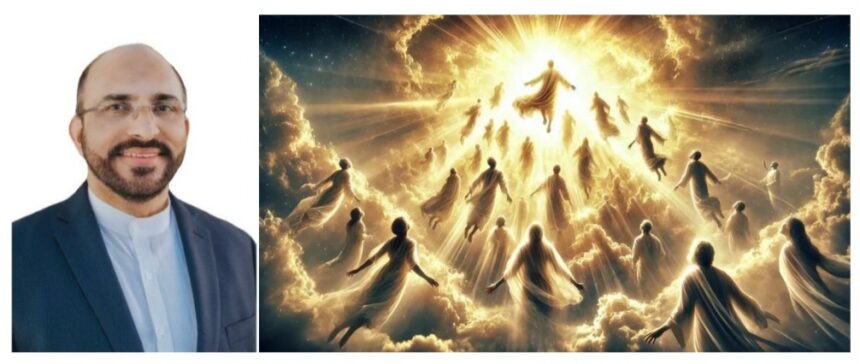
The Blessed Hope: Christ and the Rapture of His Church
Rev. Dr. Mathew Philip
Introduction:
The anticipated return of Christ for His Church is a fundamental promise of the Christian faith, often referred to as the “blessed hope.” This hope, rooted in the teachings of Christ and His apostles, instills believers with a profound sense of certainty about the future. Within the framework of the pre-millennial view, the rapture of the Church is understood as a distinct event expected to occur prior to a period of tribulation and preceding Christ’s establishment of His millennial kingdom. This article examines the scriptural foundations, theological significance, and pastoral implications of this profound hope, highlighting its importance in the life of believers and the greater Christian community.
Biblical Foundations of the Blessed Hope:
In the biblical context, Paul’s reference to “blessed hope” in Titus 2:13 signifies a profound assurance concerning the return of Christ, emphasizing a defined expectation rather than a vague idea. The phrase encapsulates the anticipation of a significant event: the rapture, which is elaborated upon in 1 Thessalonians 4:16–17. This scripture depicts the Lord descending from heaven, whereupon the deceased believers in Christ will be resurrected prior to the living believers being “caught up” to join them in the air. The term “rapture” itself is derived from the Latin, rapturo, meaning “caught up,” and underscores the dramatic nature of this event, which includes several key components: Christ’s return from heaven, the resurrection of believers who have already died, the transformation of those still alive, and ultimately, the joyous meeting with the Lord in the air. Furthermore, 1 Corinthians 15:51–52 adds depth to this event by referring to the rapture as a mystery that occurs instantaneously, “in the twinkling of an eye,” highlighting both its miraculous and imminent nature.
The Pre-Millennial Understanding:
The pre-millennial perspective holds that Christ will return before the onset of a literal thousand-year reign, as described in Revelation 20. Within this framework, theologians distinguish between two main events: the Rapture, where Christ comes for His Church, and the Second Coming, where He returns with His Church. The Rapture is characterized by several key features: it is seen as imminent, with the potential to occur at any moment, providing comfort to believers by saving them from judgment, and it is transformational, bestowing glory upon the saints. This distinction allows for an interpretation of scriptural passages that conveys both the concept of sudden expectation associated with the Rapture and the later, visible return in glory represented by the Second Coming.
The Nature of the Rapture:
A personal coming of Christ makes it clear that the rapture is not a metaphor; it is the return of Christ. In John 14:3, Jesus said, “I will come again and take you to myself.” This promise shows how close Christ is to His people; He comes not only to act but also to receive them. The rapture is a life-changing event for believers. Bodies that are mortal will be changed into glorified bodies that don’t get sick, die, or sin. This change makes the hope of resurrection life come true and fits in with the larger biblical story of redemption. In the end, the rapture leads to a meeting with Christ, “to be with the Lord forever.” The ultimate aim of salvation is to dwell eternally with Christ.
The Rapture and the Church as the Bride:
The New Testament frequently depicts the Church as the Bride of Christ, which enriches the understanding of the event of the rapture. This imagery likens the Church’s anticipation to that of a bride awaiting her bridegroom, signaling that the rapture represents a significant moment in this divine relationship. Key aspects of this symbolism include the arrival of the Bridegroom, the gathering of the Bride, and the consummation of their union. This relational perspective elevates this event from a simple prophetic timeline to a profound narrative of love and anticipation, emphasizing the personal connection between Christ and the Church.
Pastoral and Practical Implications:
The event of the rapture holds significant implications for Christian living, emphasizing several key aspects that influence the lives of believers. Firstly, it instills a life of expectation, urging believers to live with anticipation of Christ’s return, fostering readiness, vigilance, and spiritual alertness. Secondly, it serves as a call to holiness; the anticipation of Christ’s imminent return motivates believers to lead lives characterized by purity and obedience, reflecting His character in their conduct. Additionally, the concept offers comfort in times of suffering. The apostle Paul emphasizes the importance of mutual support, encouraging believers to “comfort one another with these words,” which provides solace for those enduring grief, loss, or persecution through the promise of reunion with Christ. Lastly, the urgency of evangelism is highlighted by the impending nature of the rapture, reminding the Church of its mission to proclaim the gospel while there is still time. Collectively, these elements underscore the transformative impact of the rapture doctrine on the Christian faith and the urgency with which believers are called to engage their faith in an active and meaningful way.
The Blessed Hope in Theological Perspective:
The “blessed hope” includes a number of important theological ideas, such as eschatology, which is the study of the end times; soteriology, referring to the completion of salvation; ecclesiology, concerning the destiny of the Church; and Christology, highlighting the centrality of Christ’s return. This idea makes it clear that salvation includes not only past events (justification) and present experiences (sanctification), but also future hopes (glorification). It serves as a reminder to believers of the full nature of their faith in relation to the ultimate fulfillment of God’s promises.
Challenges and Interpretive Diversity:
It is important to acknowledge that the event of the rapture is interpreted differently across various Christian traditions. The pre-millennial view has a certain way of understanding the rapture, while other views like amillennialism and post-millennialism look at the same texts in different ways. Even though these interpretations are different, all of the traditions agree that Christ will return, and believers will be with Him.
Conclusion:
The promise of Christ’s return for His Church is a key part of Christian hope. This is especially true from a pre-millennial point of view, where the rapture is seen as the glorious gathering of believers to Christ before the final unfolding of end-time events. This hope is more than just getting away from judgment; it is about looking forward to meeting Christ. The main parts of this hope are the desire to see Him face to face, to become like Him, and to live with Him forever. The Church’s hope is similar to the prayer of the early believers:“Even so, come, Lord Jesus.”