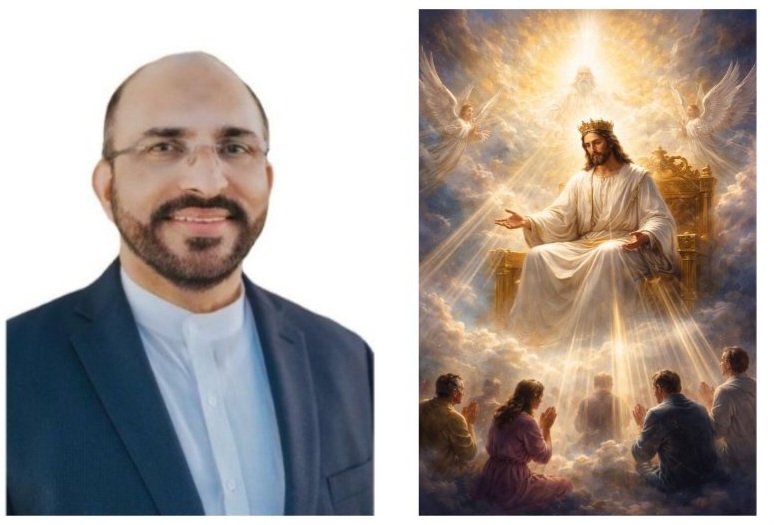
Christ Our Great High Priest: Ongoing Intercession
Rev. Dr. Mathew Philip
Introduction:
Jesus Christ is portrayed in the New Testament as the Great High Priest, Savior, King, and Lord, particularly emphasized in the book of Hebrews. This depiction offers comfort and theological understanding, illustrating that Christ’s saving work extends beyond the cross and resurrection to His ongoing intercession for believers. In a world full of weakness, temptation, and spiritual battles, the fact that Christ speaks up for us gives us both hope and comfort. Jesus’ ministry isn’t just a thing of the past; it is a real thing that is happening right now.
The Old Testament Background of the High Priest:
The Old Testament priesthood is crucial to understanding Christ as the High Priest. According to the Mosaic Law, the high priest functioned as a mediator between God and people, representing them and offering sacrifices for their sins. An essential ritual occurred annually on the Day of Atonement, when the high priest entered the Most Holy Place to perform a sacrifice on behalf of the nation, embodying the gravity of sin and the necessity of mediation. Despite this role, the Old Testament priesthood had inherent limitations: the priests were themselves sinful, sacrifices were required repeatedly, and access to God was limited. These deficiencies underscored the anticipated need for a perfect and eternal High Priest.
Christ the Perfect High Priest:
Jesus is presented as the ultimate high priest who fulfills and transcends the Old Testament priesthood, as emphasized in Hebrews 4:14-16. This passage affirms His divine nature, stating that He has ascended into heaven and encourages believers to remain steadfast in their faith. Distinguishing Himself from earthly priests, Jesus is characterized as sinless, eliminating the need for personal sacrifices; eternal, ensuring that His priesthood is everlasting; and perfect, as He offered a singular sacrifice—His own life—rather than the blood of animals. Through His death, He achieved complete atonement for sin.
The Meaning of Ongoing Intercession:
The priestly work of Christ extends beyond His crucifixion, continuing in the heavenly sanctuary as our intercessor following His resurrection and ascension. According to Hebrews 7:25, “He always lives to intercede for them,” this ongoing ministry emphasizes several key aspects of intercession. Firstly, Christ serves as our advocate, representing us before God, especially in our moments of failure. His intercession began on the cross, where He pleaded for forgiveness, thereby establishing that our acceptance before God hinges on His righteousness rather than our own performance. Secondly, the assurance of our salvation is anchored in Christ’s continuous intercession. If our relationship with God was based solely on our own consistency, we might find ourselves lost. However, due to Christ’s unceasing representation of us, we are held secure by His grace. Lastly, Christ offers help during our times of weakness, reflecting a compassionate understanding of our human struggles. Hebrews 4:15 states that He sympathizes with our weaknesses, having faced temptation Himself yet remaining sinless. This assures us that we are not engaging with a distant Savior, but rather with a compassionate High Priest who genuinely understands our pain and intercedes for us with compassion.
Access to God Through Christ:
Christ’s work as a priest has torn the veil that used to separate people from God, so now believers can go directly to God. Hebrews 4:16 says, “Let us then approach God’s throne of grace with confidence.” This change encourages people to boldly enter God’s presence. The move shows how Christ has made it possible for us to have a new relationship with God by moving from distance to closeness, fear to confidence, and exclusion to acceptance.
The Living Ministry of Christ Today:
Jesus is actively engaged in heaven, performing several vital roles on behalf of believers. He intercedes for us, sustains our faith, guides His followers, and prepares a place for us. His priestly ministry is continuous, with each moment reflecting His commitment to those who belong to Him. This understanding significantly transforms our perception of spiritual life, reminding us that we are not alone in our struggles, as Christ is actively involved in our journey.
Pastoral and Practical Implications:
The concept of Christ’s ongoing intercession for us is both theological and pastoral. It enables believers to pray with confidence, as Christ advocates on our behalf, emphasizing that our prayers are not based on our own merit but on His mediation. In times of failure, we are reminded that we are not abandoned; Christ’s intercession restores us to grace and provides healing. His support offers strength during hardships, reassuring us in moments of pain and struggle. Furthermore, the eternal nature of Christ’s priesthood motivates us to remain faithful, placing our hope in Him rather than ourselves.
Conclusion:
Christ, our Great High Priest, is portrayed as a dynamic and living Savior who continuously intercedes on behalf of believers. His provisions include giving us the perfect gift of salvation, enabling access to God, ensuring the salvation of humanity, and maintaining ongoing prayerful support for individuals. This enduring reality of Christ’s intercession is fundamental for the Christian experience, instilling confidence to live our lives, the boldness to approach God, and the peace of mind that we are held by Christ’s interceding love.